Specialised dental care for children
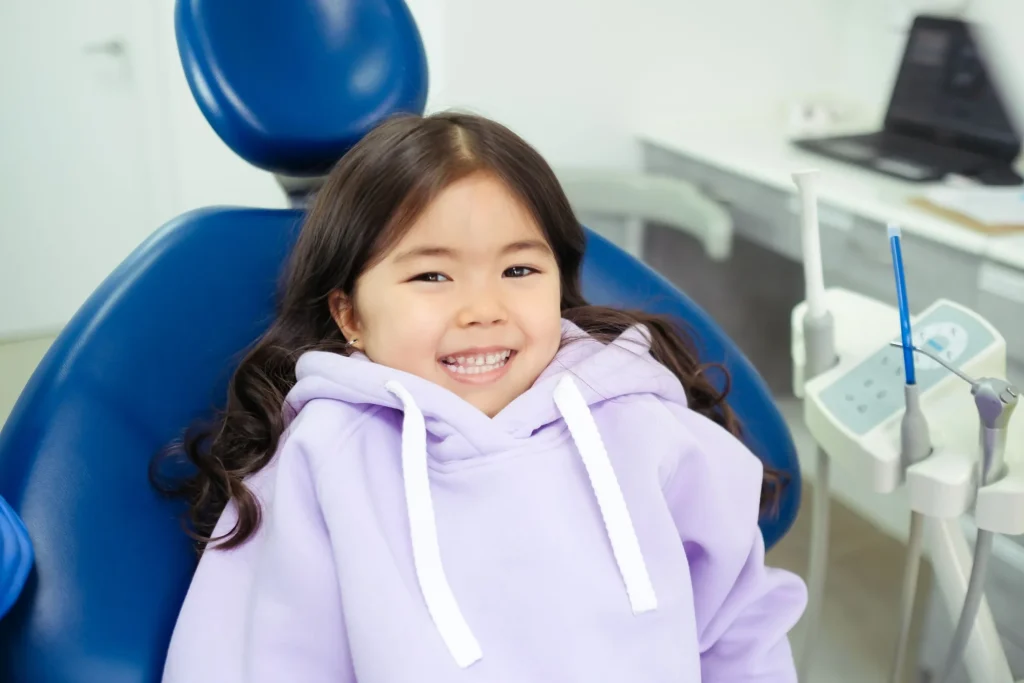
Paediatric dentistry at Giadent Smile in Sibiu focuses on creating a positive experience for little ones, from the first baby tooth through to adolescence.
Our team understands that every child is unique and needs an approach adapted to their age and personality. Baby teeth play an essential role in the correct development of speech and chewing, and in guiding the eruption of permanent teeth.
At our clinic in Sibiu, we treat every child with patience and understanding, turning the visit to the dentist into an educational and pleasant experience.
- Managing dental emergencies
Dental injuries in children need quick, calm intervention. The Giadent Smile team in Sibiu is ready to provide emergency care in a reassuring environment.
Book a consultation for your child
Paediatric dentistry services
- Preventive check-ups and education
Regular examinations allow problems to be detected early and dental development to be monitored. Children learn the importance of oral hygiene through interactive activities and explanations adapted to their age.
- Preventive treatments
Fissure sealants – effective protection for newly erupted permanent teeth
Fluoride applications – strengthening tooth enamel during the vulnerable period
Oral hygiene education – brushing and flossing techniques
- Treating cavities
We use biocompatible materials and gentle techniques to treat cavities in both baby and permanent teeth. Procedures are explained in friendly language, and the child is actively involved in the healing process.
Baby tooth extractions
Extracting a baby tooth becomes necessary when it is affected by an extensive cavity that can no longer be treated, has an infection, or does not fall out on time and blocks the eruption of the permanent tooth. The procedure is carried out under local anaesthetic, with explanations adapted to the child’s age, so that the child understands every step and feels safe. When a tooth is lost earlier than it should have been, the dentist may recommend a space maintainer — a simple device that keeps the space open until the permanent tooth erupts and prevents the neighbouring teeth from shifting.
Endodontic treatments for baby teeth
When decay reaches the pulp of the tooth, endodontic treatment makes it possible to keep the baby tooth until it is naturally replaced. Depending on the degree of damage, a pulpotomy is performed, which removes only the affected part of the pulp in the crown of the tooth, or a pulpectomy, when the canals need to be cleaned completely. Keeping the baby tooth is important for chewing, for the correct development of speech and for guiding the eruption of the permanent tooth. You can find details about root canal treatments on the endodontics page.
The first visit to the dentist
We recommend the first consultation around the age of 1, or 6 months after the first tooth erupts. This visit is meant for familiarisation and education, helping the child get used to the dental environment.
At Giadent Smile Sibiu, the first visit includes:
- A gentle examination of the mouth
- Interactive demonstrations of correct brushing
- Personalised advice for parents
- Setting up a schedule of regular check-ups
Managing anxiety in children
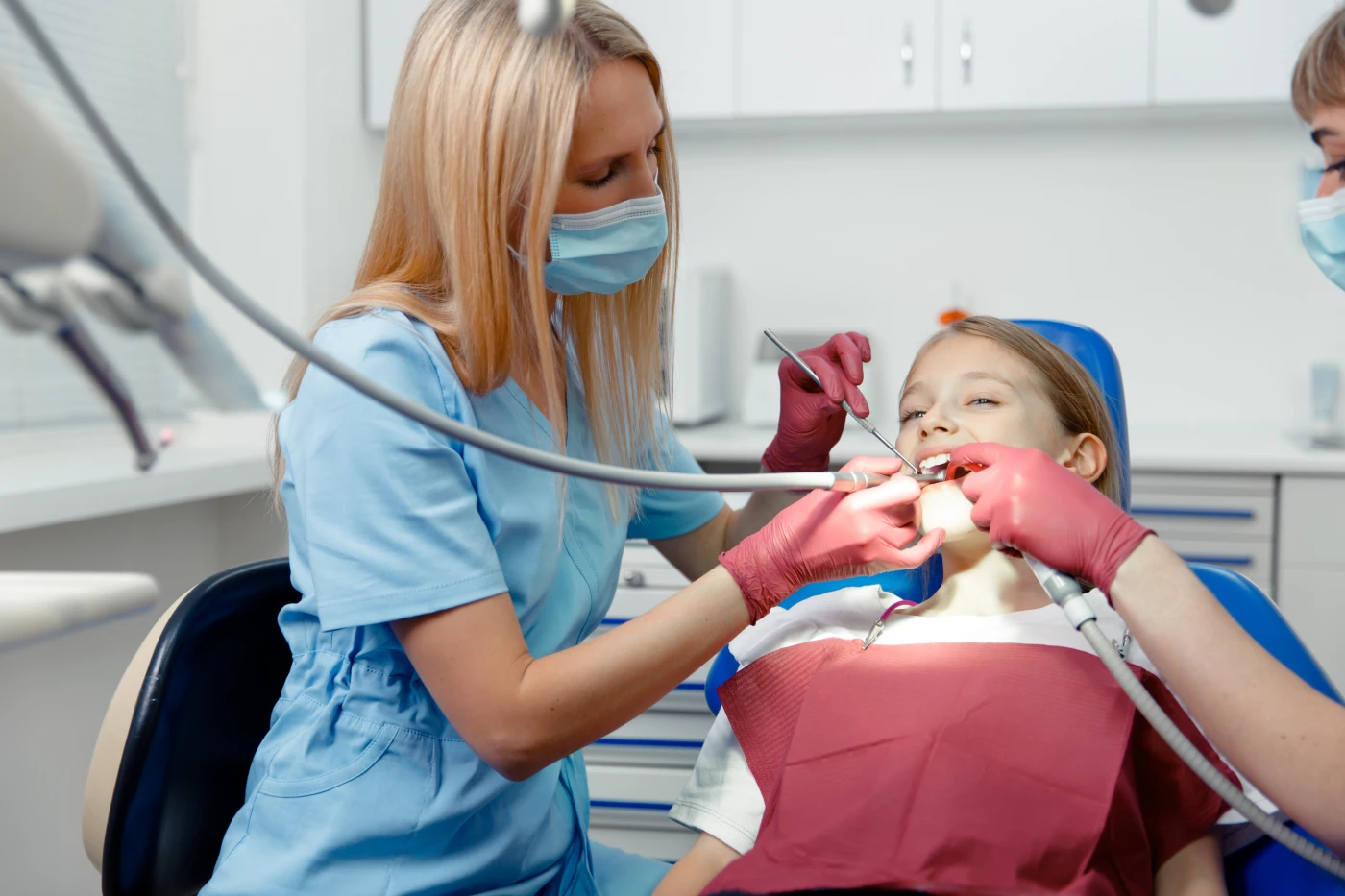
We understand that some children can be anxious at the first visit. Our team uses:
- Age-appropriate communication – simple, friendly explanations
- Relaxation techniques – deep breathing and distraction
- Parental involvement – their presence reassures the child
- A friendly environment – a colourful space and educational toys
Advice for parents
Oral hygiene at home
- Start cleaning the gums from birth
- Use soft-bristled toothbrushes suited to the child’s age
- Supervise brushing until the age of 8-10
- Introduce dental floss when the dentist advises it
Healthy eating
- Limit sweets and sugary drinks
- Offer water between meals instead of juice
- Encourage eating fresh fruit and vegetables
- Avoid frequent exposure to sugar
Habits to avoid
- Prolonged breastfeeding or bottle-feeding after the age of 1 (especially at night)
- Thumb sucking after the age of 3-4
- Using a dummy after the age of 3
Dental development by stage
6 months – 3 years
- Eruption of baby teeth and the formation of hygiene habits. Check-ups every 6 months to monitor development.
3-6 years
- Completion of the baby dentition and preparation for the permanent teeth. Application of preventive sealants.
6-12 years
- The mixed dentition period – baby and permanent teeth. Careful monitoring of eruption and of the need for orthodontic treatment. The first orthodontic consultation is recommended around the age of 7, when the development of the jaws can be assessed early.
Adolescence
- Completion of the permanent dentition and education for maintaining long-term oral health.
When should you book your child?
| Preventive composite sealing of grooves and pits (children) / tooth | 150 RON |
| Professional brushing, both arches (children) | 100 RON |
| Pulpitis treatment, baby teeth (children) | 100-200 RON |
| Gangrene treatment, baby teeth (children) | 100-200 RON |
| Baby tooth extraction (children) + topical anaesthesia | 100 RON |
| Glass ionomer filling (children) | 150 RON |
- First consultation – around the age of 1
- Regular check-ups – every 6 months
- Toothache – as soon as possible
- Injuries – immediately after the accident
- Changes in the mouth – spots, swelling, bleeding

Why choose Giadent Smile for your child’s dental care
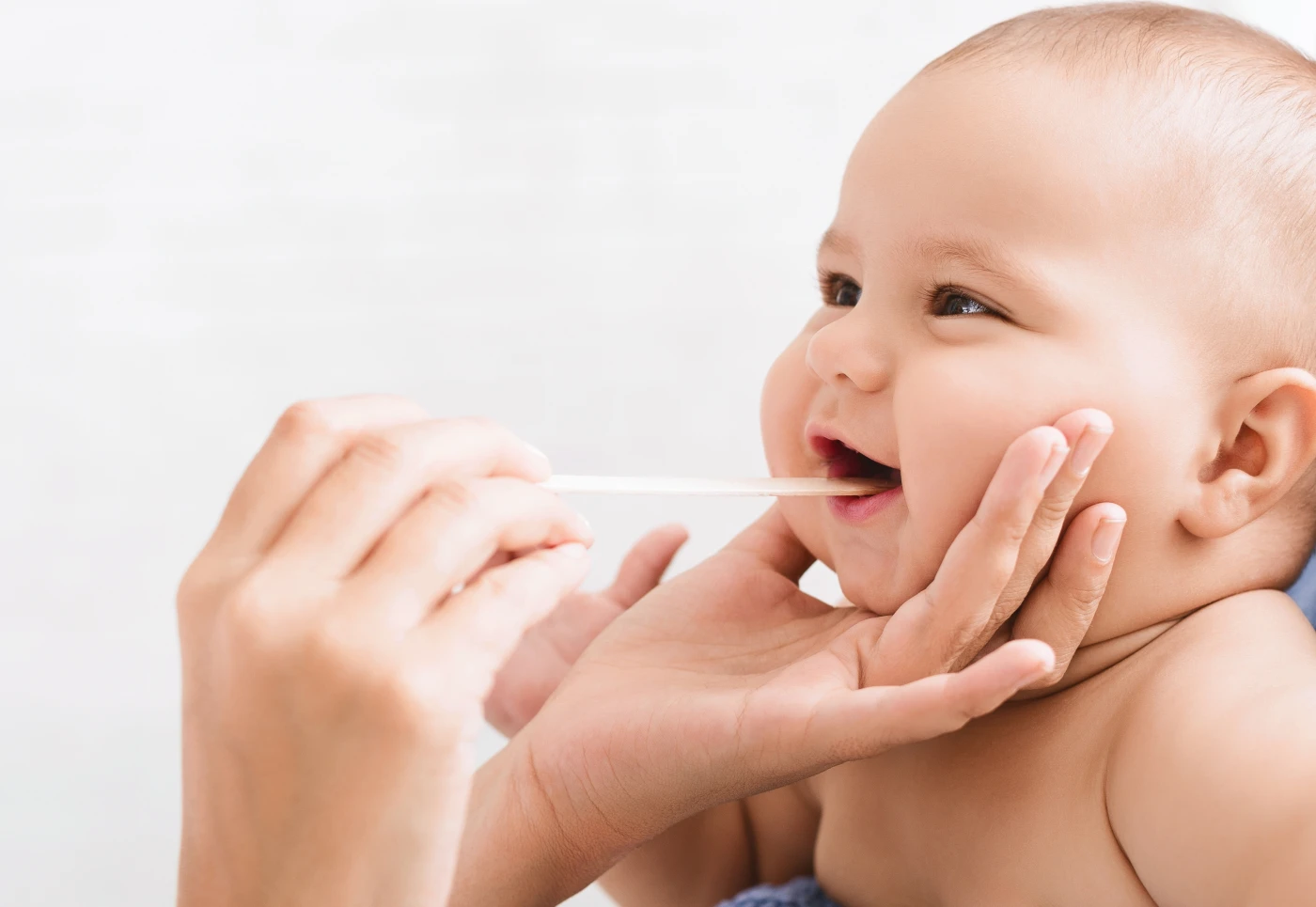
Experiences in the first years can influence how a child relates to dental visits later on. At Giadent Smile, consultations and treatments for children aim both to solve dental problems and to familiarise the little one with the dentist and the surgery.
A team skilled in communicating with children
Children need to understand what is happening to them without explanations that frighten or overwhelm them. The team adapts its communication to the child’s age and level of understanding, explaining the stages of the consultation or treatment in accessible language.
The aim is for the little one to gradually cooperate and to build the best possible relationship with the dentist.
A friendly environment, adapted to little ones
For a child, the surgery, the instruments and the unfamiliar sounds can be intimidating. That is why getting used to the dental environment is an important part of the consultation.
The child is given the time needed to get to know the dentist and what is about to happen, and the approach is adapted to their age and level of cooperation.
A preventive approach for long-term health
Paediatric dentistry does not begin when pain appears. Regular check-ups make it possible to follow the eruption of the teeth, identify cavities at an early stage and set suitable preventive measures.
Depending on age and cavity risk, the dentist may recommend hygiene appointments, fluoride treatments, dental sealants or other measures to protect baby and permanent teeth.
Partnership with parents in oral hygiene education
At a young age, oral health also depends largely on the involvement of parents. That is why the consultation can include recommendations on brushing, choosing hygiene products, diet and habits that can influence tooth development.
As the child grows, the goal is for them to gradually learn to look after their own teeth, with the parent continuing to supervise and help when needed.
Flexible scheduling for emergencies
Toothache, injuries or other acute problems in children should be assessed as soon as possible. If such a situation arises, parents can contact the clinic to explain the problem and check the available appointment options.
In the case of a dental injury, it is important to tell the clinic what happened and when the accident took place, so that you receive the right guidance on the next steps.
Children's dentist at Giadent Smile Sibiu

Dr. Georgiana Ciobanu
Dentist with skills in implantology
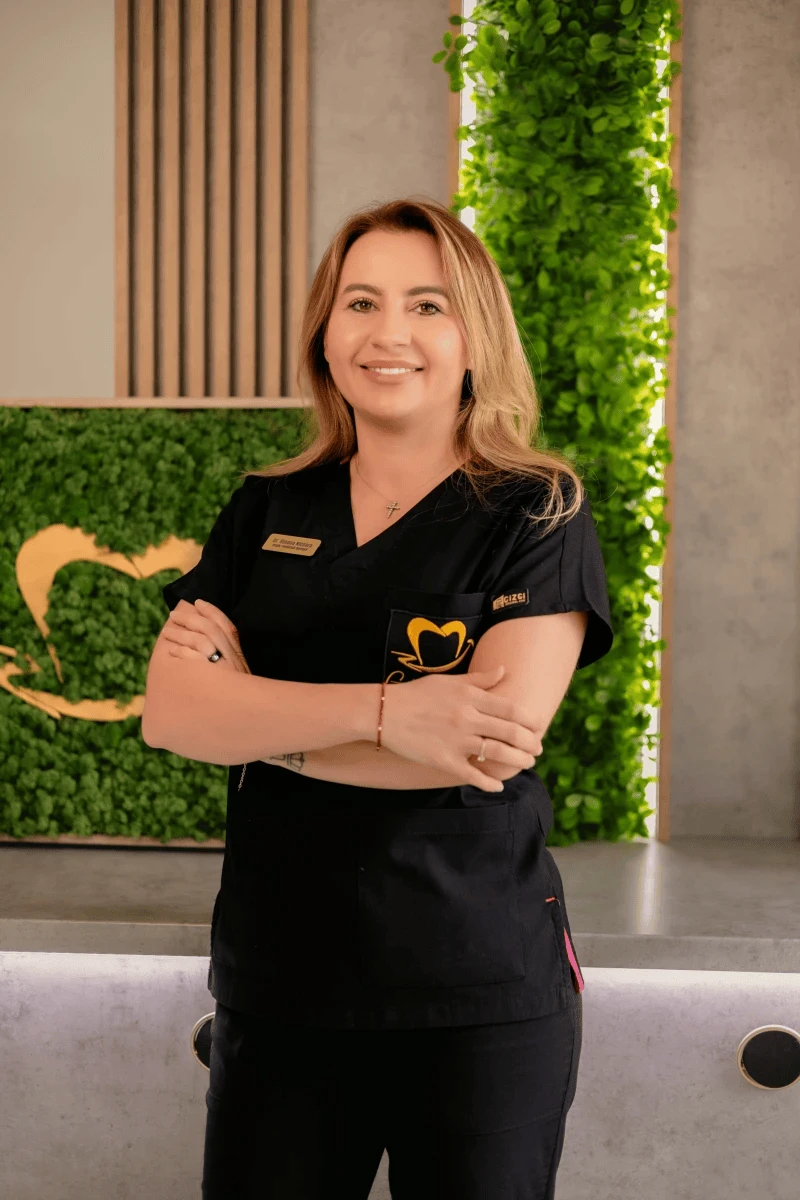
Dr. Stanciu Roxana
Dentist

Dr. Enache Denisa
Dentist

Dr. Bianu Oana
Specialist orthodontist
Frequently asked questions
At what age should I first take my child to the dentist?
The first visit is recommended once the first tooth has appeared and, in general, no later than the age of one. Consultations started early allow the dentist to follow dental development and give parents the chance to receive advice on hygiene, diet and cavity prevention.
The first visit should not wait until the child is in pain. A preventive consultation lets the little one get to know the dentist in a more relaxed setting.
Should baby teeth be treated or left to fall out?
Baby teeth should be cared for and treated when problems arise. They are important for chewing, speech and keeping the space needed for the permanent teeth to erupt.
An untreated cavity can progress to pain or infection. The dentist decides whether the tooth can be restored, needs pulp treatment or must be extracted, depending on the degree of damage and when it would naturally be replaced.
What are dental sealants and from what age are they applied?
Sealing involves applying a protective material in the grooves and pits of the teeth, areas where food debris and plaque can easily build up. The aim is to reduce the risk of cavities on these vulnerable surfaces.
There is no single age for sealing. The indication depends on the eruption of particular teeth and on the individual risk of cavities. Permanent molars are frequently assessed for sealing after they erupt.
My child is afraid of the dentist. What can I do?
Try to talk about the visit in a simple, neutral way, without promising that “it won’t hurt” and without using adults’ unpleasant experiences to explain what will happen.
You can say that the dentist will check and look after their teeth. In the surgery, the approach can be adapted to their level of cooperation, and sometimes the first meeting can play an important role in getting them used to the setting.
How often should my child come for a check-up?
The frequency of check-ups depends on age, dental health, oral hygiene and the individual risk of cavities. A child at higher risk may need more frequent monitoring than one with no dental problems.
After the consultation, the dentist can recommend the right interval for the next visit.
What should I do if my child has knocked a tooth?
Contact the dentist as soon as possible, because the management differs depending on the type of injury and on whether a baby tooth or a permanent tooth is affected. Even if the tooth looks intact, there may be injuries that need assessment.
If a permanent tooth has come completely out of its socket after the injury, this is a dental emergency and the time before assessment matters. A baby tooth that has been knocked out must not be replanted.
Does my child need braces?
The need for orthodontic treatment cannot be determined from the look of the teeth alone. The orthodontist assesses tooth eruption, tooth alignment, the bite and the development of the jaws.
The first orthodontic assessment is recommended around the age of 7. This does not mean that every child will need braces at that age; sometimes it is enough to monitor development.
Is anaesthetic used for children?
Yes, local anaesthetic can also be used for children when the procedure requires it. The type and method of administration are decided by the dentist depending on the treatment, the child’s age, medical history and level of cooperation.
Before the procedure, the dentist can explain the steps in language suited to the child to reduce fear and help them cooperate.
How much does a children's consultation cost?
The fees for children’s dental consultations and treatments can be found in the price table on this page. The total cost depends on the problem identified and the procedures needed.
After the assessment, the dentist can explain which treatments are recommended and what they cost.
Can I stay next to my child during treatment?
A parent’s presence in the surgery can be decided depending on the child’s age, their level of cooperation, the type of procedure and how the dentist feels the consultation or treatment can best be managed.
For some children, a parent’s presence can offer reassurance, while in other situations the dentist may recommend a different approach to make communication and cooperation with the little one easier.