What is endodontics?
Endodontics is the branch of dentistry concerned with diagnosing and treating conditions of the dental pulp, the tissue inside the tooth commonly known as the “tooth nerve”. When the pulp becomes inflamed or infected because of a deep cavity, an injury or other problems, root canal treatment may be needed.
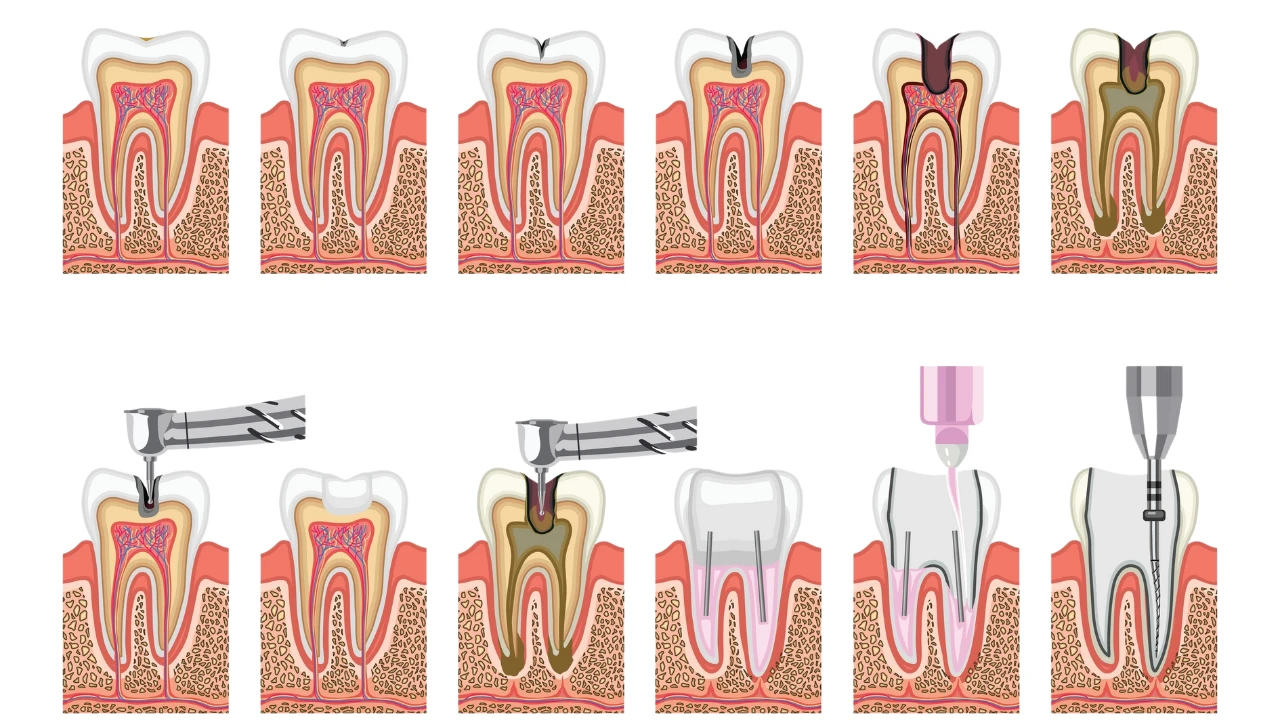
During endodontic treatment, the doctor removes the affected tissue from inside the tooth, cleans and disinfects the root canal system, then seals it. The aim is to eliminate the infection and keep the natural tooth, where the clinical situation allows.
When is endodontic treatment needed?
Endodontic treatment may be needed when the dental pulp is inflamed, infected or irreversibly damaged. The diagnosis is made by the doctor after the consultation and, where necessary, radiological investigations.
Pulp infections
When bacteria enter the dental pulp through deep cavities, fractures or cracks in the tooth, an infection develops that causes intense pain and can lead to a dental abscess.
Dental trauma
Blows to the teeth can damage the pulp even when the tooth looks intact on the outside. Endodontic treatment prevents future complications.
Extreme sensitivity to heat or cold
Persistent pain with heat, cold or touch can indicate irreversible damage to the dental pulp, requiring endodontic treatment.
Tooth discolouration
A darkening tooth can signal that the pulp has died, in which case root canal treatment can save the tooth and restore its natural appearance.
Pain when chewing or touching the tooth
Pain that appears when you bite, chew or press on a particular tooth may be associated with inflammation or infection of the tissues around the root. A consultation and a radiological examination can help identify the cause.
Swollen gum or abscess around a tooth
Swelling of the gum, a collection of pus or a small pimple-like bump near the tooth can be signs of an infection of dental origin. In such cases, medical assessment should not be delayed.
Previous root canal treatment that did not have the desired result
A tooth that has had endodontic treatment may sometimes need root canal retreatment if the infection persists or returns. The doctor reassesses the tooth and the earlier treatment to determine whether it can be redone and whether the tooth can be kept.
Types of endodontic treatment at Giadent Smile
Endodontic treatment is adapted to the anatomy of the tooth, the number and configuration of the root canals and the clinical situation. Depending on these factors, an initial treatment may be needed, or a previous root canal treatment may need to be redone.
Endodontic treatment for single-rooted teeth
Single-rooted teeth generally have one root, although the anatomy of the canals can vary. Treatment involves accessing, cleaning, disinfecting and sealing the root canal system, with the aim of removing the affected tissue and keeping the natural tooth.
Endodontic treatment for multi-rooted teeth
Multi-rooted teeth, such as molars, have several roots and may have a more complex canal system. Treatment requires locating, cleaning, disinfecting and filling the canals to control the infection and allow the tooth to be kept when the prognosis is favourable.
Endodontic retreatment
Retreatment may be needed when a previously treated tooth has a persistent or recurrent infection. The existing materials are removed, the canal system is reassessed, cleaned and disinfected, then filled again, if the clinical situation allows the tooth to be kept.
Paediatric endodontics: pulpotomy and pulpectomy
In children, damage to the dental pulp may require procedures adapted to baby teeth or young permanent teeth. Pulpotomy involves removing the affected part of the pulp from the crown of the tooth, while pulpectomy involves removing the pulp from the pulp chamber and the root canals.
Stages of endodontic treatment at Giadent Smile
-
Diagnosis and planning
-
Anaesthesia and access
-
Cleaning the canals
-
Shaping and irrigation
-
Filling the canals
-
Final restoration
- The tooth is restored with a filling or a dental crown to return its function and long-term strength.
Equipment used in endodontic treatments at Giadent Smile
In endodontic treatments, precision is important for correctly locating, cleaning and filling the root canals. At Giadent Smile, the doctors use equipment and instruments dedicated to the different stages of root canal treatment.
Rotary instruments
We use rotary systems that allow precise and fast cleaning of the canals, reducing treatment time and improving patient comfort.
A Woodpecker endomotor is used for the mechanical preparation and cleaning of the root canals, together with rotary endodontic instruments. These allow the doctor to work in a controlled way inside the canals and adapt the preparation to the anatomy of each tooth.
A Castellini micromotor is also used during treatments, equipment that allows controlled operation of rotary instruments at different stages of dental procedures.
Apex locators
These devices accurately determine the length of the root canals, ensuring a complete and precise filling.
Biocompatible filling materials
We use modern filling materials that adapt perfectly to the shape of the canals and provide a long-term seal.
Dental microscope
The dental microscope provides additional magnification and illumination of the working field, and is useful for locating hard-to-see canals and managing complex endodontic cases.
Laser therapy for canal sterilisation
In certain cases, endodontic treatment can be supplemented by using the dental laser to decontaminate the root canal system. The laser is used as an adjunctive method to the endodontic protocol, alongside mechanical cleaning and irrigation of the canals.
Advantages of endodontic treatment
Saving the natural tooth
Root canal treatment allows you to keep your own tooth, avoiding extraction and the need for replacement with an implant or denture.
Pain relief
The procedure eliminates the source of infection and pain, providing immediate relief and preventing future complications.
Full function
After treatment and restoration, the tooth functions normally, allowing you to chew and speak without restrictions.
Natural appearance
A tooth treated endodontically keeps its natural appearance and blends perfectly with the rest of your teeth.

Care after endodontic treatment
The first few days
It is normal to have slight sensitivity after treatment, which gradually eases. The prescribed medication helps control any discomfort.
Diet
Avoid very hard foods for the first few days and chew on the opposite side until fully healed.
Oral hygiene
Continue brushing and flossing as normal, taking care around the treated area so as not to irritate the tissues.
Final restoration
A tooth treated endodontically usually needs a dental crown for long-term protection, especially in the case of back teeth.
How much does root canal treatment cost?
| Service name | Price |
| Soothing dressing (emergency) | 150-200 RON |
| Vital pulpectomy, single-rooted + root canal filling (1-2 sessions) | 300-500 RON |
| Vital pulpectomy, multi-rooted + root canal filling (1-2 sessions) | 400-600 RON |
| Devital pulpectomy | 200-400 RON |
| Gangrene treatment, single-rooted + root canal filling (3 sessions) | 350-500 RON |
| Gangrene treatment, multi-rooted + root canal filling (3 sessions) | 400-600 RON |
| Canal filling removal + endodontic retreatment | 150-250 RON |
| Canal filling removal without retreatment | 100-200 RON |
| Pulpitis treatment, baby teeth (children) | 100-200 RON |
| Gangrene treatment, baby teeth (children) | 100-200 RON |
| Adult emergency treatment | 200-300 RON |
| Endodontic treatment, single-rooted tooth, performed without a microscope | 550-750 RON |
| Endodontic treatment, multi-rooted tooth, performed without a microscope | 650-800 RON |
| Endodontic treatment, single-rooted tooth, performed with a microscope | 750-900 RON |
| Endodontic treatment, multi-rooted tooth, performed with a microscope | 850-1000 RON |
| Core build-up with fibreglass post, single-rooted tooth | 300-500 RON |
| Core build-up with fibreglass post, multi-rooted tooth | 350-500 RON |
| Core build-up – simple | 250-500 RON |
| Pre-treatment session (gingivectomy) | 250-500 RON |
| Soothing dressing / Calcium | 100-150 RON |
| Devitalising agent | 100-200 RON |
| Root MTA | 100-200 RON |
| FILLING + PULP CAPPING WITH BIODENTINE/NEO PUTTY | 500-700 RON |
| FILLING + PULP CAPPING WITH CORONAL MTA | 400-600 RON |
| Endodontic retreatment, single-rooted tooth, performed under a microscope | 700-1000 RON |
| Endodontic retreatment, multi-rooted tooth, performed under a microscope | 800-1000 RON |
| * Prices may change if the endodontic treatment turns out to need extending |
Frequently asked questions
Does root canal treatment hurt?
Root canal treatment is normally carried out under local anaesthetic, so you should not feel pain during the procedure. Some temporary sensitivity or discomfort when chewing may appear afterwards, and this usually eases gradually. Its intensity and duration vary from one patient to another.
How long does root canal treatment take?
The duration depends on the tooth being treated, the number and anatomy of the canals and the complexity of the case. A single-canal tooth may take less time than a molar with several canals or a case that involves endodontic retreatment.
Do I need a dental crown after root canal treatment?
Not every tooth treated endodontically automatically needs a crown. The choice of restoration depends on the position of the tooth, the amount of tooth structure remaining and the forces it is subjected to. Particularly for back teeth with significant loss of structure, the dentist may recommend a restoration that offers additional protection.
What is the difference between a filling and a root canal treatment?
A dental filling rebuilds the part of the tooth affected by decay when the situation allows the dental pulp to be preserved. Root canal treatment becomes necessary when the pulp is irreversibly damaged or infected, and involves cleaning, disinfecting and sealing the root canal system.
What happens if I do not treat a deep cavity in time?
A cavity that advances towards the dental pulp can cause inflammation, pain and, later, infection or pulp necrosis. The infection can spread to the tissues around the root and lead to an abscess. Early treatment can reduce the risk of these complications.
Does root canal treatment change the colour of the tooth?
A tooth treated endodontically may change colour over time, but this does not happen in every case. If the tooth darkens, the dentist can assess the cause and recommend a suitable aesthetic solution.
Can a failed root canal treatment be repeated?
Yes. In certain situations, endodontic retreatment can be carried out. The dentist removes the existing materials, re-evaluates and disinfects the canal system and places a new filling, if the clinical situation allows the tooth to be saved.
How many appointments are needed for root canal treatment?
Some endodontic treatments can be completed in a single appointment, while more complex cases may need several visits. The number of appointments depends on the anatomy of the tooth, the presence and extent of infection, and the clinical progress.
How much does root canal treatment cost?
The cost varies depending on the tooth treated, the number of canals, the complexity of the case and whether it is an initial treatment or a retreatment. For an exact fee, patients can consult the current Giadent Smile price list or request an assessment.
What difference does a microscope make in root canal treatment?
The dental microscope gives the dentist extra magnification and lighting of the working area, making it easier to see details that are hard to spot with the naked eye. It can be useful for finding additional canals, managing complex anatomy and certain endodontic retreatments.