What is a fixed denture?
A fixed denture is a prosthetic restoration used to replace one or more missing teeth and, unlike a removable denture, it is not taken out by the patient every day for cleaning.
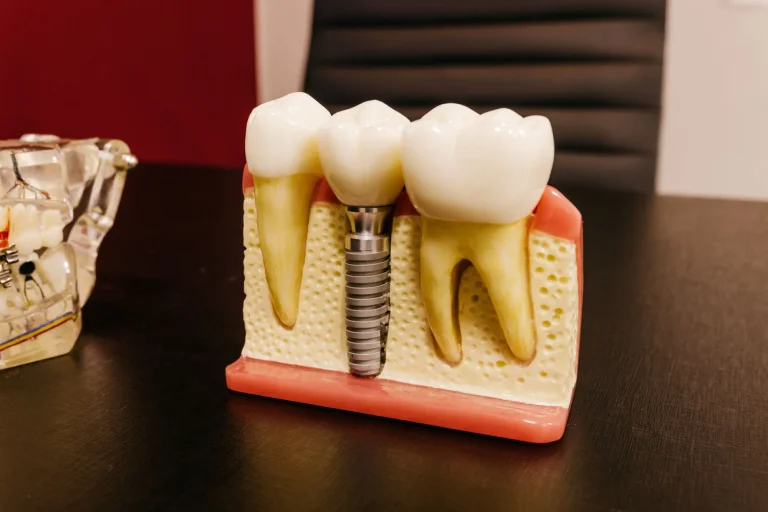
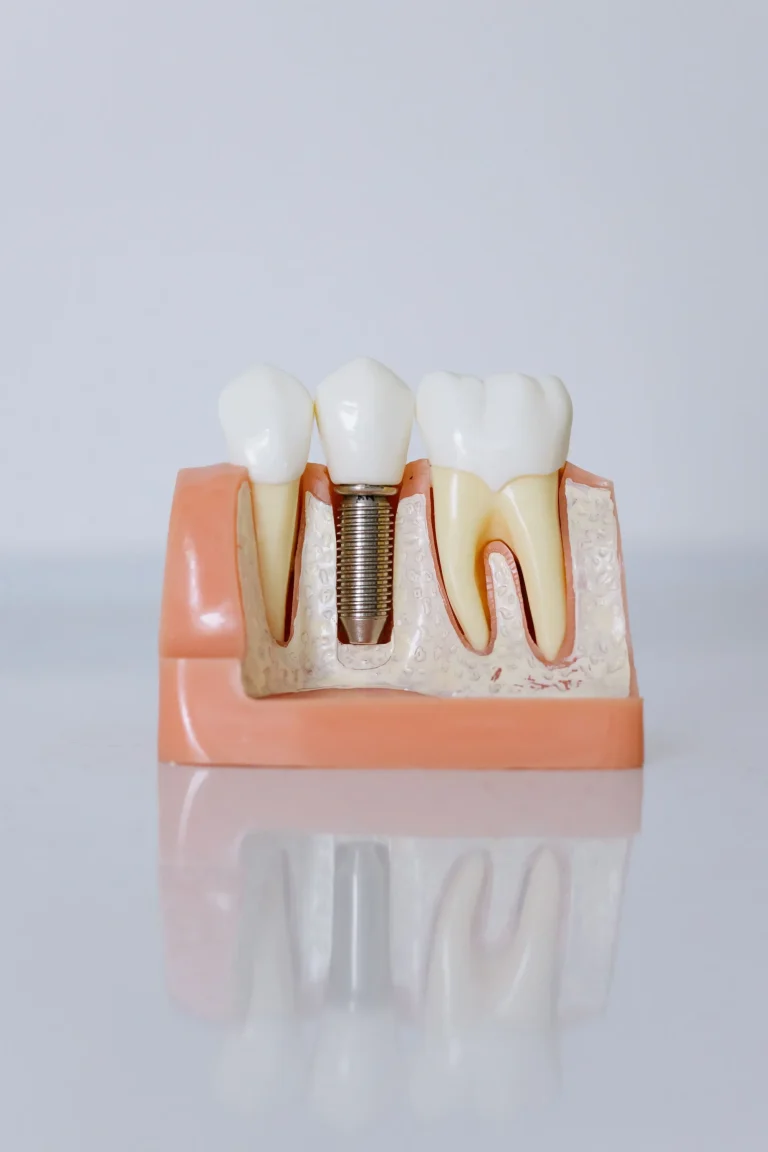
Depending on the clinical situation, the restoration can be supported by the remaining natural teeth or by dental implants placed in the bone. The choice of solution depends on the number and position of the missing teeth, the condition of the existing teeth, the bone volume and the health of the gums.
For patients who have lost all or almost all of the teeth in an arch, implants can be used to support an extended fixed restoration. The number of implants and the type of restoration are determined after clinical and imaging assessment.
Types of fixed dentures
There is no single type of fixed denture suitable for every patient. The main difference lies in the structures that support the restoration: natural teeth or implants.
Fixed denture on implants
When several teeth or the entire arch are missing, dental implants can provide the support points for a fixed prosthetic restoration.
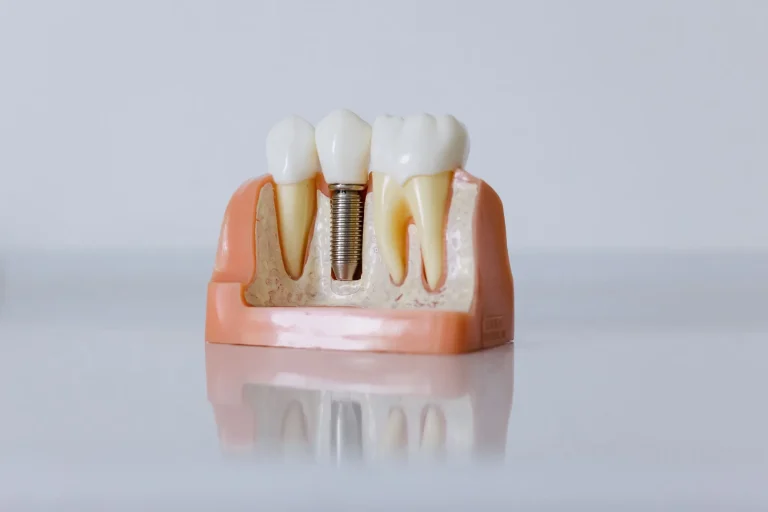
The implants are placed in the bone, and the prosthetic restoration is then fixed onto them. The number and position of the implants are determined by the patient’s anatomy, the available bone, the distribution of chewing forces and the type of restoration planned.
Fixed denture on natural teeth
If there are natural teeth that can provide adequate support, they can be used to make a fixed prosthetic restoration, such as a dental bridge.
The teeth that will support the restoration must be assessed before treatment. The doctor checks their strength, the condition of the roots, the gums and the supporting bone.
With a conventional bridge, the abutment teeth must be prepared so they can support the restoration.
Fixed denture on 4 implants (All-on-4)
The All-on-4 concept uses four implants to support a restoration across an arch. The implants are positioned so that they can distribute the forces exerted on the prosthetic restoration.
This solution can be considered for certain cases of complete tooth loss or for patients whose arches require extensive rehabilitation. It is recommended only after assessment of the bone and the clinical situation.
Fixed denture on 6 implants (All-on-6)
In a restoration supported by six implants, the support points are distributed across the arch to carry the prosthetic restoration.
The choice between four, six or another number of implants does not follow a universal rule. The doctor must take into account the patient’s anatomy, the quantity and quality of the bone, the chewing forces and the particularities of the final restoration.
Fixed or removable denture: what is the difference?
The main difference is how the restoration is supported and used.
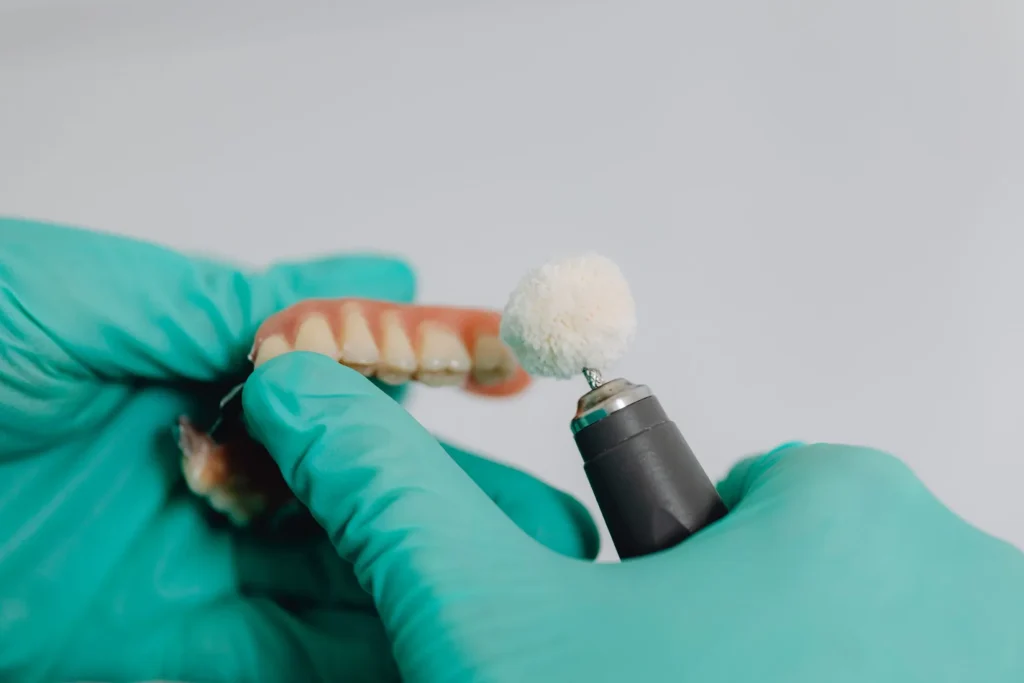
A removable denture can be taken out and put back into the mouth by the patient. Depending on its type, it may rest on the gum and on the existing oral structures.
A fixed denture stays attached to the natural teeth or implants and is not removed daily by the patient. It is cleaned in the mouth, including careful cleaning of the areas beneath and around the restoration.
From the patient’s point of view, a fixed restoration can feel different when chewing and speaking compared with a removable denture. However, not every patient can receive the same solution, and the choice must be made after assessing the teeth, gums and bone.
When is a fixed denture recommended?
A fixed prosthetic restoration may be considered when missing teeth affect chewing, the appearance of the smile or the normal function of the arch.
It may be indicated:
- when one or more teeth are missing and the space can be restored with a fixed restoration;
- when there are natural teeth that can support a bridge, provided they meet the necessary conditions;
- when several teeth are missing and implants can be used as support for the restoration;
- when all the teeth in an arch have been lost, if the situation allows a fixed restoration on implants;
- when a removable denture is no longer the preferred solution and assessment shows that a suitable fixed alternative exists.
The final recommendation is made after the consultation and the necessary investigations, because the condition of the bone, gums and remaining teeth can change the treatment plan.
Stages of making a fixed denture
Making a fixed denture begins with establishing the support on which the restoration will be built. That is why the stages differ between a restoration on natural teeth and one on implants.
1. Consultation and diagnosis – the teeth, gums, bite and the areas where teeth are missing are assessed.
2. Investigations and planning – when implants are needed, imaging provides information about the bone and the important anatomical structures for treatment planning.
3. Preparing the support – natural teeth may require preparation and prior treatments, while for restorations on implants the surgical stage needed to place them is carried out.
4. Healing and prosthetic preparation – for restorations on implants, a period of osseointegration may be needed before the final restoration.
5. Making the prosthetic restoration – the information needed to make the restoration is recorded, so that it is adapted to the patient’s arch and bite.
6. Fitting and checking the restoration – the restoration is positioned, and the doctor checks the fit, the contacts between teeth and the occlusion.
Materials used for fixed dentures
The material is chosen according to the type of restoration, its position, the functional and aesthetic requirements and the structure that will support it.
For fixed restorations, depending on the indication, the following materials may be used:
- porcelain-fused-to-metal, which combines a metal framework with an outer ceramic layer;
- zirconia, used for different types of restorations thanks to its mechanical and aesthetic properties;
- all-ceramic, indicated in certain situations where aesthetic requirements are especially important;
- composite or acrylic materials, which may be used in some temporary restorations or in certain types of implant-supported work.
The doctor and the dental technician choose the appropriate material according to the prosthetic plan and the particularities of the case.
What are the advantages of a fixed denture?
A fixed restoration aims to replace lost teeth without the patient having to remove it every day.
Depending on the chosen solution, the advantages may include:
- stability when chewing, thanks to fixation on teeth or implants;
- restoration of chewing function in areas where teeth have been lost;
- restoration of the look of the teeth, through a restoration matched to their shape and position;
- no need to take the denture out every day for patients who receive a fixed solution;
- the possibility of restoring an entire arch on implants, when the clinical situation allows it;
- treatment that adapts to different situations, from a few missing teeth to complete tooth loss.
However, the benefits and limitations differ between restorations on natural teeth and those on implants, and must be assessed individually.
How long does a fixed denture last and how is it cared for?
A fixed denture is designed for long-term use, but there is no identical lifespan for all restorations. Durability depends on the material, the support it is fixed on, the chewing forces, oral hygiene and regular check-ups.
A fixed restoration is not removed daily for cleaning, but it must be cleaned carefully. In addition to brushing, auxiliary aids may be needed to clean the spaces between the restoration and the gum or around the implants.
Check-ups and professional cleanings are important for monitoring the restoration as well as the teeth, implants and gums that support it.
Fixed dentures in Sibiu: price
The price of a fixed denture depends first of all on the type of restoration. A restoration supported by natural teeth involves different stages and costs than an extensive restoration supported by implants.
The final cost can be influenced by:
- the number of teeth to be replaced;
- the number of implants required;
- the material chosen for the prosthetic restoration;
- the treatments needed before the prosthetic work;
- the need for additional surgical procedures;
- the type of temporary and final restoration.
| Service name | Price |
| Removal of crown / abutment tooth | 50 RON |
| Cementation of final restoration / unit | 50 RON |
| Full / partial acrylic denture | 2000 RON |
| Full / partial flexible denture | 2500 RON |
| Cast metal framework denture (denture only) | 4000 RON |
| Relining of acrylic denture | 150 RON (in the clinic)/ 250 RON (in the laboratory) |
| Porcelain-fused-to-metal crown | 800 RON |
| Monolithic zirconia crown | 1000 RON |
| Zirconia + ceramic crown | 1300 RON |
| EMAX / zirconia veneers | 1400 RON |
| Night guards for bruxism, retainers and whitening trays | 250 RON |
| Digital analysis of dental occlusion with Teethan | 250 RON |
Following the consultation, the complete plan can be drawn up and the procedures needed for your case can be identified.
Why choose a fixed denture at the Giadent Smile clinic in Sibiu
A fixed rehabilitation involves more than choosing a denture. The bone support, the remaining teeth, the implants needed and the way the final restoration will work when chewing must all be evaluated.
At Giadent Smile, the treatment is planned starting from an individual assessment and the type of restoration suited to the patient’s situation.
Bredent implants with manufacturer’s warranty
For implant-based treatments, Giadent Smile uses Bredent implants. They can be integrated into prosthetic rehabilitation plans when the patient’s situation allows implants to be used as support for the fixed restoration.
The implants come with the manufacturer’s warranty, under the conditions set by the manufacturer. This should not be confused with a medical guarantee of treatment success, which depends on several biological and individual factors.
3D digital planning and CBCT
For implant-based treatments, CBCT examination allows a three-dimensional assessment of the bone and anatomical structures in the area where the implants are to be planned.
The information obtained helps determine the position of the implants and plan the surgical and prosthetic stages according to the patient’s anatomy.
Specialist implantology doctor
Cases involving implant placement are assessed and treated by the clinic’s implantology doctor. The plan must coordinate the surgical stage with the prosthetic restoration that the implants will later support.
In this way, both the placement of the implants and the end goal, a functional restoration adapted to the case, are taken into account from the very start of treatment.
Free consultation and payment in instalments
At Giadent Smile the consultation is free, so the first step can be assessing your current situation and discussing the available treatment options.
For treatments involving higher costs, payment in instalments is also possible, according to the options available at the clinic.
The doctors who make fixed dentures at Giadent Smile

Dr. Georgiana Ciobanu
Dentist with expertise in implantology

Dr. Dragason Lucian
Specialist in dento-alveolar surgery
Frequently asked questions
How much does a fixed denture cost?
The cost differs depending on the type of restoration, the number of prosthetic units, the material used and the chosen support. For a fixed denture on implants, the number of implants and any necessary surgical procedures must also be taken into account. The clinic’s rates can be found in the prices section, and the full cost of your case is determined after assessment.
What is the lifespan of a fixed denture?
No lifespan can be guaranteed for every restoration. Longevity depends on the material, oral hygiene, the condition of the supporting teeth or implants, chewing forces and regular check-ups. The prosthetic restoration and the implants that support it are separate components and may evolve differently over time.
How long does it take to get used to a fixed denture?
After a new restoration is fitted, there may be a period of adjustment to the shape of the teeth, the bite and the sensation in the mouth. The duration varies from patient to patient and with the extent of the restoration. If you notice sore areas or a feeling that the bite is not right, a check-up is advisable.
Can I eat any food with a fixed denture?
Once the treatment is completed and you have adapted, a fixed restoration is designed to take part in chewing. However, very hard foods and habits such as cracking hard objects or foods with your teeth can damage both the prosthetic restorations and the natural teeth. Immediately after certain procedures, the doctor may also indicate temporary restrictions.
Is having a fixed denture fitted painful?
Fitting the final prosthetic restoration is not usually the stage that causes the most discomfort. However, if the treatment involves preparing teeth, extractions or placing implants, these procedures may require local anaesthesia. After surgical procedures there may be temporary tenderness or swelling.
Is a fixed denture removed for cleaning?
Not by the patient. A fixed denture is designed to stay attached to its support and is cleaned in the mouth. The doctor may recommend interdental brushes, special floss or other aids for cleaning hard-to-reach areas around the restoration.
Can I speak normally after getting a fixed denture?
One aim of the restoration is also to restore oral functions, but after an extensive restoration is fitted there may be a period of adjustment in speech. The tongue and oral muscles need to get used to the new shape of the teeth. If difficulties persist, the restoration should be checked by the doctor.
Is there a risk of the fixed denture coming loose?
Yes, a prosthetic restoration can develop mechanical complications over time, including loosening or damage of some components. If you notice movement, a change in your bite or part of the restoration coming loose, it must be checked by the doctor and you should not try to repair it at home.
How many implants are needed for a fixed denture?
The number is not the same for every patient. For certain full-arch restorations, concepts based on four or six implants can be used, but other configurations exist too. The choice depends on the available bone, the anatomy, the distribution of the implants, the type of restoration and the particularities of the case.
Can I have a fixed denture if I have bone loss?
Bone loss does not automatically rule out a fixed restoration on implants. The doctor must determine the volume and distribution of the available bone and whether implants can be placed under the existing conditions.
In some cases bone augmentation procedures may be needed, or a different treatment strategy may be recommended. The decision is made after clinical and imaging assessment.