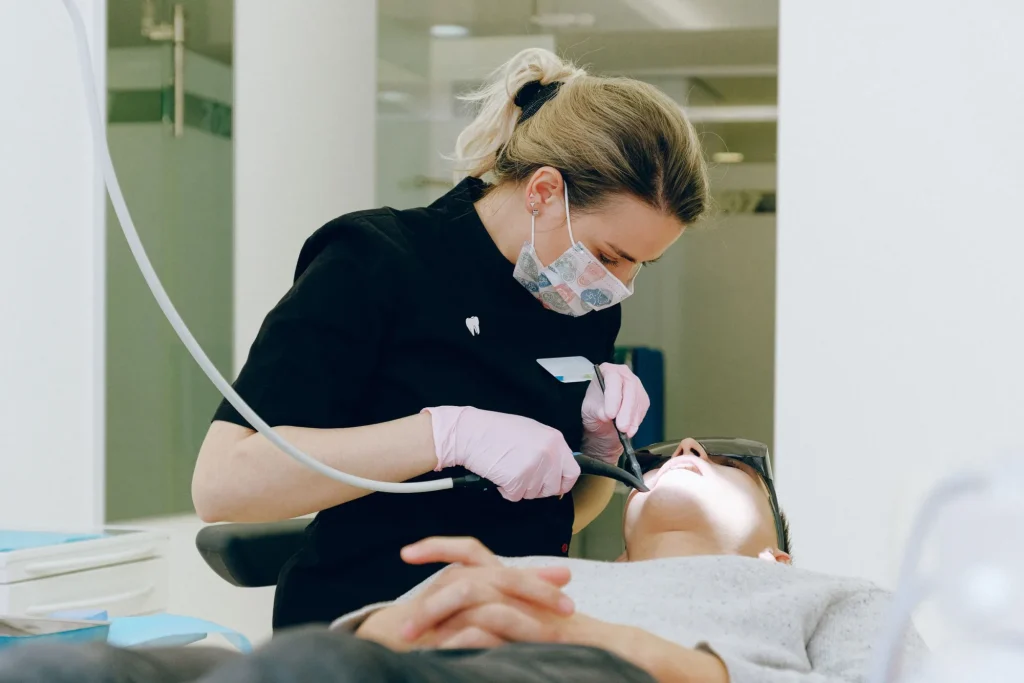
What is dental laser therapy and how does it work?
Dental laser therapy uses concentrated light energy to act in a controlled way on the tissues of the oral cavity, depending on the type of laser and the procedure performed. In dentistry, the laser can be used as a primary or complementary method in certain soft tissue treatments and, depending on the technology of the device, in other dental procedures.
The laser energy is directed precisely at the treated area, and the device parameters are adapted to the procedure and the type of tissue. Possible applications include periodontal treatments, certain soft tissue surgical procedures and use as an adjunctive method for decontamination in endodontics.
Advantages of laser treatments
Greater comfort
In certain procedures, the laser allows treatment to be carried out with reduced discomfort and without the vibrations produced by rotary instruments. Whether anaesthesia is needed is determined by the doctor according to the type and extent of the intervention.
Precision in treatment
Laser energy can be directed in a controlled way at the treated area, which allows the doctor to work precisely and limit the impact on the surrounding healthy tissue.
Favourable recovery
In certain soft tissue interventions, the precision with which the procedure is carried out and the control over the treated area can contribute to a more comfortable post-operative recovery.
Reduced bleeding
In procedures on soft tissue, certain types of laser produce a coagulation effect during the intervention. As a result, bleeding can be reduced, and the doctor has better visibility of the working field.
Dental treatments performed with laser at Giadent Smile
The dental laser can be used in several dental specialities, either as part of the treatment or as a complementary method to conventional techniques. At Giadent Smile, the indication for laser therapy is determined by the doctor according to the condition being treated and the specifics of each case.
Periodontal laser treatment
In the treatment of periodontal conditions, the laser can be used as an adjunctive method to decontaminate periodontal pockets and reduce the bacterial load in the treated areas. Laser therapy is integrated into the periodontal plan when there is a clinical indication.
Canal sterilisation in root canal treatment
In endodontics, the laser can complement the mechanical cleaning and irrigation of the root canals by decontaminating the endodontic system. The procedure is used as an adjunctive step, without replacing the conventional protocol for cleaning, disinfecting and filling the canals.
Gum and soft tissue surgery
The laser can be used for certain interventions on the gums and other soft tissues of the oral cavity. Depending on the indication, applications can include:
- frenectomy;
- gingivectomy;
- gum reshaping or contouring;
- other surgical procedures on soft tissue.
Laser-activated teeth whitening
The laser can be used in certain cosmetic dentistry procedures, such as activating teeth whitening gels for improved results.
Decontamination in the treatment of peri-implantitis
In certain cases of inflammation or infection of the tissues around implants, the laser can be used as an adjunctive method to decontaminate the area, as part of a treatment protocol set according to the severity of the condition.
When laser treatment is recommended
- bleeding / inflamed gums (periodontitis)
- gum recession, periodontal pockets
- short lingual/labial frenum
- gum contouring for aesthetic purposes
- anxious patients who avoid classic instruments
- patients for whom reducing the need for anaesthesia is a goal
How laser treatment works
-
Case assessment
The doctor assesses the clinical situation and determines whether laser therapy is indicated for the specific case. The procedure is explained and the patient’s questions are answered.
-
Preparation
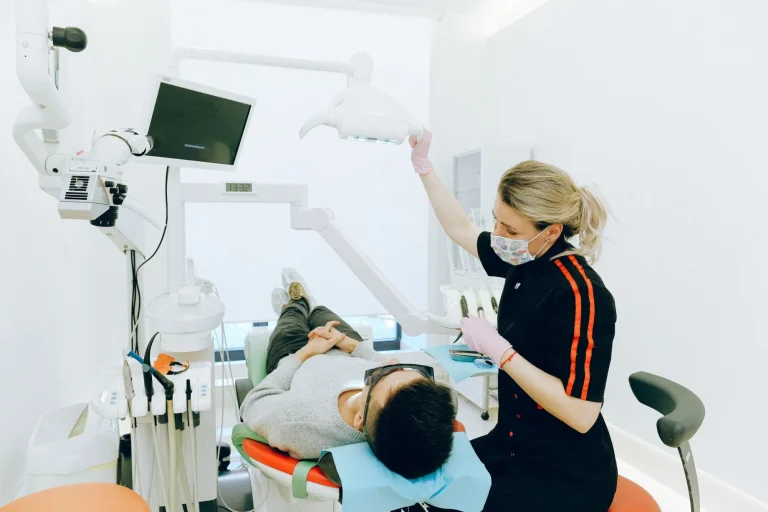
The necessary protective measures are applied (special eye-protection glasses) and the area to be treated is prepared.
-
Applying the treatment
The procedure is carried out with controlled movements, continuously monitoring the tissue response to the laser energy.
-
Post-treatment care
Specific instructions are given for caring for the treated area, and the necessary check-ups are scheduled.
Laser treatment or the classic method. What is the difference?
The dental laser does not replace classic methods in all dental treatments. In some procedures it can be used in place of certain conventional instruments, while in others it is used as a complementary method. The choice depends on the condition being treated, the type of tissue and the aim of the procedure.
| Criterion | Laser treatment | Classic method |
| Anaesthesia | In certain procedures a smaller amount of anaesthetic may be needed, although anaesthesia may still be required | The need for anaesthesia depends on the procedure performed |
| Bleeding | In soft tissue interventions, the coagulation effect can reduce bleeding | Bleeding is controlled using conventional surgical techniques |
| Discomfort | Does not produce the vibrations typical of rotary instruments and can offer better comfort in certain procedures | Discomfort differs depending on the instruments and procedure used |
| Healing | In certain soft tissue interventions, controlled trauma to the area can support a comfortable post-operative recovery | Healing time depends on the extent of the intervention and the patient’s individual response |
| Precision | The energy can be directed in a controlled way at the treated area | Conventional instruments also allow precise control when used properly |
In practice, lasers and classic methods are often complementary, not absolute alternatives. The doctor determines the right technique or combination of techniques according to each patient’s diagnosis and specific needs.
Why choose laser treatment at the Giadent Smile clinic
At Giadent Smile in Sibiu, laser therapy is integrated into the treatment plan when there is a clinical indication, depending on the condition being treated and the specifics of each patient.
Experience in using the dental laser
Giadent Smile doctors use laser technology in the procedures for which it is indicated, with parameters adapted to the type of treatment and the area being treated.
Laser integrated into periodontal and implant treatments
Laser technology can complement periodontal treatments by decontaminating the affected areas and, where indicated, can be used in the treatment of the tissues around implants. In this way, laser therapy is part of a broader treatment plan rather than being used as an isolated procedure.
Free consultation and personalised plan
During the consultation, the doctor assesses the dental problem and determines whether laser therapy is indicated in your case or whether another treatment method is more suitable. The consultation is free, and recommendations are adapted to each patient’s diagnosis and needs.
Frequently asked questions
Does laser treatment hurt?
In many procedures, using the laser is associated with reduced discomfort, although the experience differs depending on the area treated and the extent of the intervention. The laser does not produce the vibrations typical of rotary instruments, which can add to patient comfort in certain treatments.
Is anaesthesia needed for laser treatment?
It depends on the procedure. Some laser treatments may require local anaesthesia, while in other situations it may not be necessary. The doctor determines the need for anaesthesia according to the type of intervention and the patient’s sensitivity.
How long does healing take after laser treatment?
Healing time differs depending on the procedure performed, the area treated and the body’s individual response. In certain soft tissue interventions, the precise and controlled action of the laser can contribute to a comfortable post-operative recovery.
Is laser treatment safe?
Yes, when the dental laser is used by trained staff, with parameters and protective measures appropriate to the procedure. The patient and the medical staff wear specific eye protection during treatment.
What dental treatments can be done with a laser?
Depending on the type of device, the dental laser can have applications in several treatments. At Giadent Smile, it can be used in periodontal treatments, to decontaminate root canals, in certain interventions on the gums and soft tissues, and in the treatment of the tissues around implants.
Is the laser better than classic treatment for the gums?
Not in every situation. The laser and conventional methods can play complementary roles in periodontal treatment. The choice depends on the diagnosis and severity of the condition, and the laser does not automatically replace scaling, subgingival cleaning or surgical interventions when these are necessary.