What is professional teeth whitening?
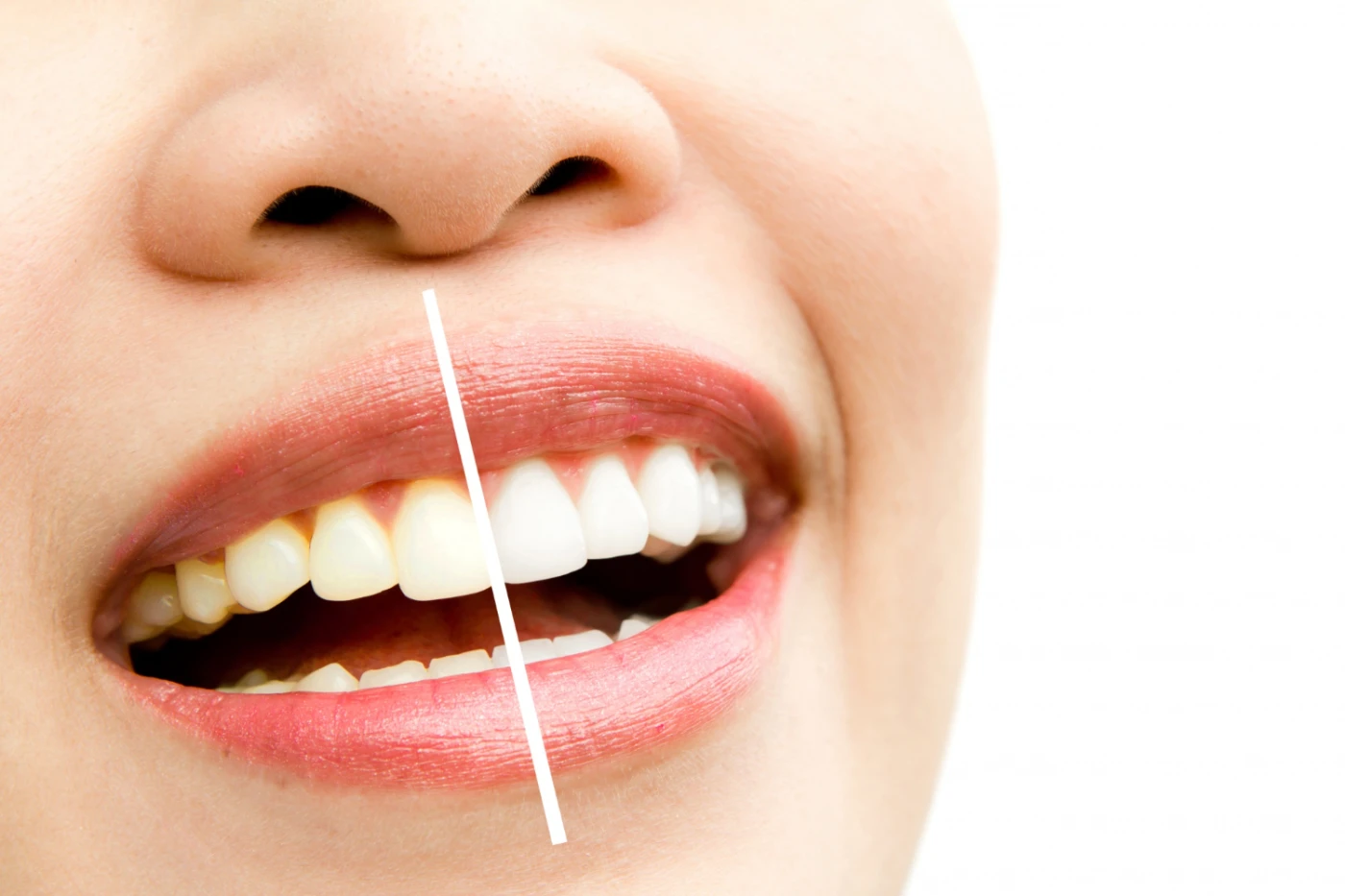
Professional teeth whitening is a dental treatment that aims to lighten the shade of natural teeth, using whitening agents based on hydrogen peroxide or carbamide peroxide.
These substances act on the compounds responsible for tooth discolouration, helping to achieve a lighter shade.
Unlike professional cleaning, which removes tartar and surface stains, whitening can also change the actual colour of the teeth.
- Teeth whitening treatment may be an option if:
- Your teeth have taken on a yellowish shade over time.
- You often drink coffee, tea or other drinks that can stain teeth.
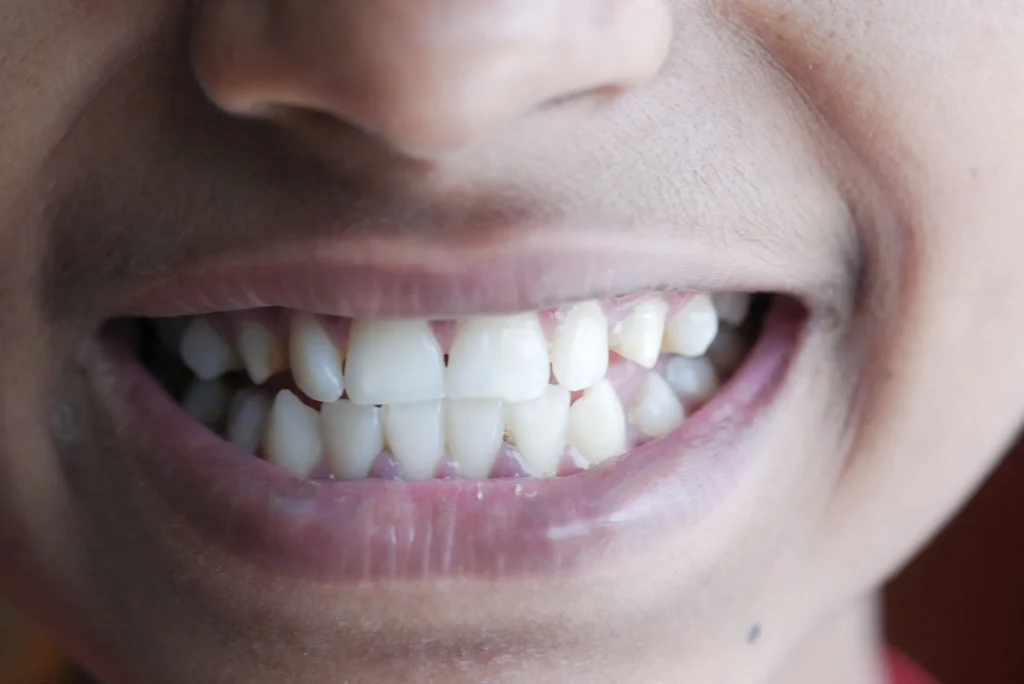
- You have stains or discolouration that do not disappear with simple cleaning.
- You want a brighter smile without resorting to veneers or crowns.
The result depends on the initial colour of your teeth, the cause of the discolouration and your individual response to treatment.
Teeth whitening methods at Giadent Smile
There are several methods of teeth whitening, each with its own particulars regarding application, duration and maintenance of results.
The right method is chosen after assessing your oral health and discussing your aesthetic goals.
In-clinic whitening with light activation
In-clinic whitening is carried out under the supervision of the dentist, using a professional whitening gel.
Depending on the system used, the procedure may include activating the gel with a light source. However, the whitening effect is mainly produced by the active substance in the gel, and using light does not guarantee a better result.
The main advantage of in-clinic whitening is that treatment takes place in a controlled environment, with protection of the soft tissues and monitoring of any tooth sensitivity.
It is an option for people who prefer to have the procedure done in the clinic, without repeated applications at home.
At-home whitening with custom trays
Whitening with custom trays involves using devices shaped to fit your teeth, together with a whitening gel recommended by the doctor.
The trays are worn at home, following a schedule set according to the product used and the particulars of your case.
This method allows gradual whitening, and treatment can last from a few days to a few weeks.
It is important to follow the recommended amount of gel and application time. Using too much, or extending the treatment, can increase the risk of sensitivity and gum irritation.
Combined whitening — in the clinic and at home
Combined whitening pairs a professional in-clinic session with later use of custom trays at home.
This approach may be recommended when the doctor considers that additional stages would help to reach or maintain the desired shade.
The schedule for wearing the trays and the length of treatment are adapted to how your teeth respond to whitening.
Internal whitening, for non-vital teeth
Sometimes a tooth that has had root canal treatment, also known as a non-vital tooth, can become darker than the neighbouring teeth.
In some situations, the doctor may recommend internal whitening, a procedure different from ordinary whitening of the tooth surface.
It involves placing a whitening agent in a controlled way inside the tooth, after checking the root canal treatment and putting the necessary protection in place.
Internal whitening is not suitable for every non-vital tooth. The doctor must assess the cause of the discolouration, the condition of the root and any risks before recommending the procedure.
How a teeth whitening session works
If you choose professional in-clinic whitening, treatment begins with an assessment of your teeth and gums. The aim is to achieve a lighter shade without neglecting oral health.
Consultation and assessment of the starting shade
The doctor examines your teeth, gums and any existing restorations. Cavities, areas of sensitivity and other problems that might need treatment before whitening are also identified at this point.
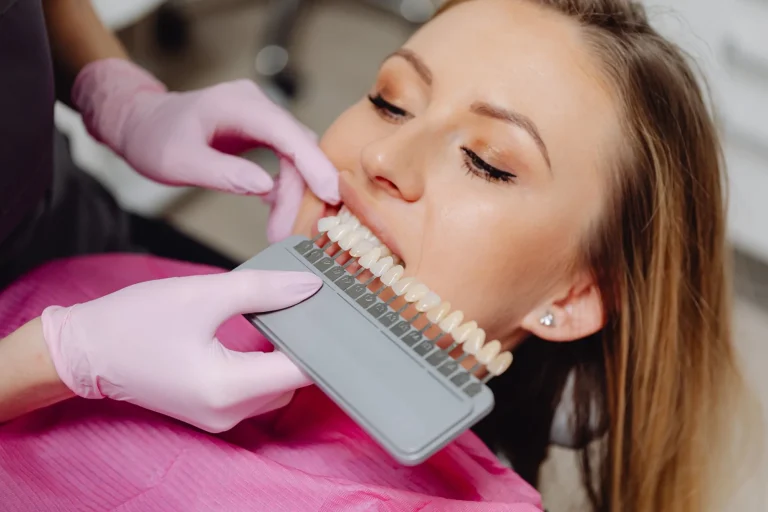
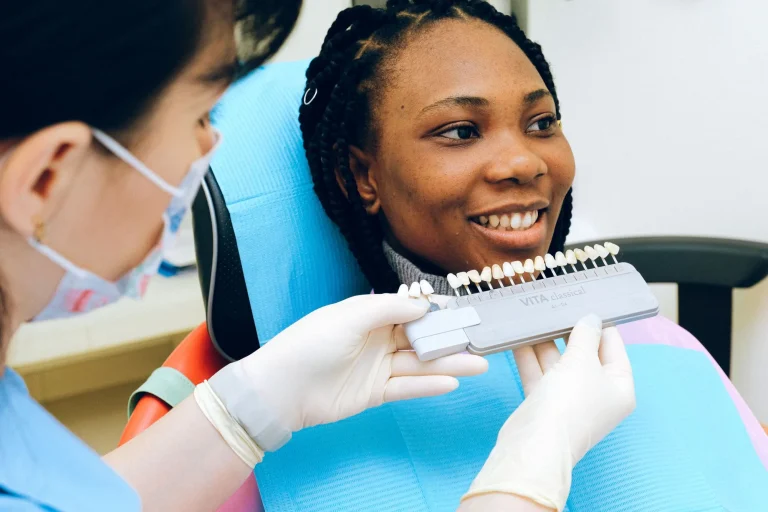
The starting shade of your teeth is recorded so that the result achieved after the procedure can be compared.
Professional cleaning beforehand
Before whitening, professional cleaning may be needed to remove tartar, plaque and surface stains.
This stage allows a more accurate assessment of the natural colour of your teeth and prepares the tooth surfaces for treatment.
Depending on the clinical situation, cleaning can be done during the same visit or at a separate appointment.
Protecting the gums and applying the gel
For in-clinic whitening, the doctor isolates the treatment area and protects the gums, so that the whitening gel does not come into uncontrolled contact with the soft tissues.
The gel is then applied to the surface of the teeth, following the protocol of the product used.
Activation and monitoring
Depending on the professional whitening system, the gel may be left to work for a set period or used together with a light source.
Throughout the procedure, the doctor monitors how your teeth react and any discomfort. If significant sensitivity appears, the treatment can be adjusted or stopped.
At the end, the gel is removed and the result is assessed against the starting shade.
Recommendations after the session
After whitening, temporary sensitivity may appear, especially with cold or hot drinks.
To protect the result and reduce discomfort:
- Follow the doctor’s recommendations on strongly coloured foods and drinks.
- Avoid smoking, especially in the period immediately after treatment.
- Use a toothpaste for sensitive teeth if the doctor recommends one.
- Maintain good oral hygiene, brushing twice a day and cleaning between the teeth.
- Do not repeat the whitening on your own initiative if you are not satisfied with the shade achieved.
Who can have teeth whitening and who cannot
Professional teeth whitening is intended for people who want to improve the colour of their natural teeth and whose oral health allows the procedure.
However, not every patient is a suitable candidate.
Whitening may be recommended if:
- You have healthy natural teeth but are not happy with their colour.
- You have discolouration acquired over time, for example from food, drinks or smoking.
- You have no active cavities or untreated gum disease.
- The doctor considers that treatment can be carried out safely.
Whitening should be postponed or may be contraindicated if:
- You have cavities, dental cracks or leaking restorations that need treatment.
- You have gum inflammation or other active oral conditions.
- You have severe tooth sensitivity that needs to be investigated.
- You are pregnant or breastfeeding, when elective whitening is generally postponed as a precaution.
You are under 18, because the use of whitening products with certain peroxide concentrations is restricted by European regulations.Before any procedure, the doctor determines whether whitening is suitable and which method offers the best balance of benefits and risks for your situation.
Teeth whitening does not work on crowns, veneers and fillings
An important point to know before whitening is that whitening gels act on natural teeth, not on the materials that crowns, veneers or fillings are made of.
For example, if you have a crown on a front tooth, it will keep roughly the same colour after whitening, while the surrounding natural teeth may become lighter.
As a result, a colour difference may appear between the restorations and the rest of your teeth.
If you have dental work that is visible when you smile, the doctor can explain whether whitening is recommended and whether some restorations will need replacing afterwards to achieve a uniform appearance.
Whitening before or after veneers and crowns?
If you plan to have veneers or crowns, the order of treatments matters for achieving a harmonious colour.
In many cases, whitening of the natural teeth is done before the shade of the final restorations is chosen.
That way, the doctor can select the colour of the veneers or crowns based on the shade achieved after whitening, not the starting one.
A waiting period after whitening is also needed, so that the colour can stabilise and, for bonded restorations, to avoid affecting the bonding process.
If you already have veneers or crowns, whitening will not change their shade. That is why we recommend discussing the whole aesthetic plan with the doctor before starting the procedure.
How long results last and how to maintain them
The results of professional teeth whitening are not permanent. Over time, teeth can darken again, depending on eating habits, oral hygiene and individual characteristics.
In some people the result can remain visible for one to three years, but the duration varies considerably and cannot be guaranteed.
To keep the whitening result for as long as possible:
- Limit frequent consumption of coffee, tea and other strongly coloured drinks.
- Avoid smoking, which promotes tooth staining.
- Maintain rigorous oral hygiene.
- Schedule regular professional cleanings, as recommended by the doctor.
- Talk to the doctor before using whitening products for maintenance.
In some cases, maintenance sessions or additional applications with trays may be recommended, but their frequency must be determined individually.
Sensitivity after whitening: what is normal and what is not
Tooth sensitivity is one of the most common side effects of professional whitening.
You may feel temporary discomfort on contact with cold air, cold water or foods at extreme temperatures. As a rule, sensitivity is short-lived and eases within a few days.
Its intensity depends on the concentration of the gel, the length of exposure and the initial sensitivity of your teeth.
When should you contact the doctor?
If the pain is strong, persists, gets worse or is localised to a single tooth, it is important to ask for an assessment. Significant gum irritation or injury to the soft tissues also needs attention.
For patients prone to sensitivity, the doctor can adapt the whitening method and recommend desensitising products.
Professional whitening or pharmacy kits
There are many teeth whitening products available in pharmacies or online: strips, gels, toothpastes and universal trays.
The main difference from professional whitening is the medical assessment and control over the procedure.
| Professional whitening | Unsupervised home products |
| Starts with an assessment of oral health. | Do not usually include a dental check-up. |
| The method and product are chosen to suit the patient. | Used according to the product’s general instructions. |
| Custom trays can be used. | Some kits include universal trays. |
| Sensitivity and adverse reactions can be assessed by the doctor. | The user has to recognise any problems alone. |
| Professional products are used within the applicable legal conditions. | Concentrations and effectiveness vary by product. |
Whitening toothpastes act mainly on surface stains and do not produce the same kind of colour change as peroxide-based gels.
Products bought from unauthorised sources or used excessively can cause irritation and sensitivity. That is why we recommend talking to the doctor before starting a home whitening treatment.
Teeth whitening Sibiu: price
If you are interested in the price of teeth whitening in Sibiu, you should know that it can vary depending on the method chosen and the particulars of the treatment.
The main factors that influence the cost are:
- The recommended whitening method.
- The professional system and products used.
- Whether custom trays need to be made.
- The number of sessions or applications.
- Any preparatory procedures, such as professional cleaning.
Why choose teeth whitening at the Giadent Smile clinic in Sibiu
When you want whiter teeth, both the aesthetic result and the way the treatment is carried out matter.
At Giadent Smile, in Sibiu, whitening begins with an assessment of your oral health and the choice of a method suited to your teeth.
Professional whitening system
Professional whitening uses products specially designed to change the shade of natural teeth, applied according to dental protocols.
Depending on the recommended method, treatment can be carried out in the clinic or at home, with custom trays and guidance from the doctor.
The aim is to achieve a brighter shade, taking into account the starting colour of your teeth and their sensitivity.
Professional cleaning included before whitening
Before whitening, it is important that the tooth surfaces are clean, free of tartar or plaque deposits that can affect the assessment of colour.
The doctor determines whether professional cleaning is needed and when it should be done.
Cleaning helps prepare the teeth for whitening and allows the natural shade to be identified more accurately.
Oral health assessment before the procedure
Not every colour change can be corrected by whitening, and not every patient can begin treatment straight away.
Before the procedure, the doctor checks the condition of your teeth and gums, the presence of cavities, tooth sensitivity and any crowns, veneers or fillings.
This assessment helps in choosing the right method and in identifying problems that must be treated before whitening.
Free consultation and a personalised plan
Every patient has a different tooth shade and their own expectations for the result.
During the consultation you can discuss the look you want, the available whitening methods, tooth sensitivity and the cost of treatment.
The doctor can recommend an approach adapted to your situation, explaining what results are possible and how they can be maintained over time.
Frequently asked questions
How much does teeth whitening cost?
The price of teeth whitening depends on the method used: in-clinic whitening, at-home whitening with custom-made trays, or a combined treatment. The cost may also be affected by any preparatory procedures you need. For current Giadent Smile prices, you can contact the clinic before booking.
Does teeth whitening hurt?
Teeth whitening should not cause severe pain, but it can cause temporary sensitivity, especially to cold. Some people may feel brief twinges during or after the procedure. If the discomfort is strong or persistent, you should tell your dentist.
How many shades lighter will my teeth get?
The number of shades varies from patient to patient. The result depends on your starting colour, the cause of the staining and the whitening method. Your dentist can assess your shade before and after treatment, but cannot guarantee a specific number of shades.
How long do the results of professional whitening last?
The result can last from a few months to several years, depending on your eating habits, smoking, oral hygiene and the characteristics of your teeth. To maintain the colour, regular professional cleaning and following your dentist’s advice are important.
Does whitening damage tooth enamel?
When carried out correctly, with suitable products and under professional supervision, whitening is generally considered safe for healthy teeth. However, sensitivity and gum irritation can occur. Excessive or incorrect use of whitening products can increase the risk of side effects.
Can I have whitening if I have crowns or veneers?
Yes, in some situations you can whiten your natural teeth even if you have crowns or veneers. However, you should know that the materials these restorations are made of do not change colour with whitening. Your dentist will assess whether shade differences may appear and what solutions are available.
Can I have whitening if I have sensitive teeth?
It depends on the cause and intensity of the sensitivity. Your dentist needs to check for cavities, gum recession, cracks or other problems. In some cases whitening can be adapted, while in others it is advisable to postpone the procedure.
Can I have whitening while pregnant?
Elective teeth whitening is generally not recommended during pregnancy or breastfeeding, as a precaution and because of limited safety data for these periods. It is best to postpone the procedure and talk to your dentist.
From what age can teeth whitening be done?
In Romania and the European Union, cosmetic tooth-whitening products that contain or release more than 0.1% and up to 6% hydrogen peroxide are not intended for people under 18. For teenagers with significant discolouration, the dentist must assess the cause and the treatment alternatives.
What shouldn't I eat after whitening?
After whitening, your dentist may recommend temporarily limiting strongly coloured foods and drinks, such as coffee, black tea or red wine. If sensitivity appears, it may help to avoid very cold, hot or acidic foods. How long the restrictions last depends on the protocol used and the advice you receive.
How often can I repeat whitening?
There is no universal interval that suits every patient. The frequency depends on the method used, the sensitivity of your teeth and how long the results last. Whitening should not be repeated excessively or without a dental assessment, as this can increase the risk of sensitivity and irritation.